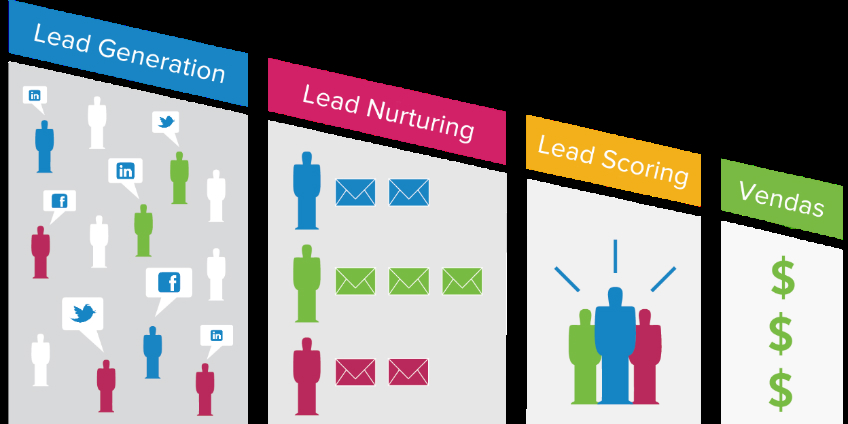
10 Effective Ways to Build Your Lead Base
1. How to Create A Buyer Persona
When you initially build your leads, you must understand one of the most important things you need to do is to identify your buyer persona. This is what will allow you to find your ‘cold leads’, which will be the first point of contact you will do in your marketing.
A cold lead is someone who has never heard from you before but who you have the option of contacting. This might be an email address you’ve bought, or someone who has just now landed on your site. What makes them a lead at all, is the fact that they fit your demographic. This is the kind of person that is likely to want to buy your product and they fit precisely within your target demographic.
If you can find that kind of person, that then means that you stand a much better chance of converting them from a cold lead to a warm lead – of getting them to give you permission to contact them. But you can’t know if someone fits into your target demographic until you know precisely what that target demographic is. And this is where your ‘buyer persona’ comes into play.
What is a Persona?
Essentially, a persona is a profile of the kind of person who precisely matches your target demographic. That means they should be the right age and the right sex. They should have the right income and they should have hobbies/interests or a career that aligns with what you’re selling.
This is then what will allow you to target your ads to acquire those cold leads. You do this with PPC advertising, or by advertising in the right social media groups.
A persona goes further than this though and actually means that you are literally profiling your leads as though they were a real person. You need to think about their interests, their hobbies and even their dreams.
Once you know what the dream of your persona is, you can then start marketing to them much better by thinking about your value proposition. How are you going to make life better for that person? What problems that they deal with regularly are you going to solve for them?
Your persona will also tell you where you can find your readers. What other interests do they have for instance? You know they like your niche but perhaps they are also likely to enjoy cooking? In which case, what other opportunities does this open up?
Knowing your persona will even help you to create posts that are much more engaging because they speak directly to the kind of reader who is likely to be looking at them!

2. Explaining Leads in Terms of Dating
Understanding the lead life-cycle, lead generation and ‘lead scoring’ is one of the best things you can possibly do for your business if you want to increase your turnover, revenue and profits while also increasing the brand loyalty and trust you get for your business.
The problem is that too many people don’t think about leads and instead focus just on sales. They believe the aim of their website is to convert as many visitors as possible and to maximize their sales. The irony is that this actually ends up driving away a lot of potential customers and actually reducing their profits significantly.
Why is that? Because people don’t like to be sold to. And an easy way to understand this is to think about it in relationship to dating…
Why Sales Leaves People Cold
When someone visits your website, whether through SEO, AdSense or any other means, they are essentially going to be cold leads. That means that they fall into your demographic and they are potentially going to be interested in your niche but they have at no point demonstrated any particular loyalty to your brand and nor have they given you permission to contact them and/or try to sell to them.
When this happens and you try and sell, this is then going to feel pretty much like cold calling. They don’t know who you are, they have no need to trust you and here you are trying to get them to buy something from you. This is essentially the same thing as approaching a stranger in a bar and asking them to come home with you – there’s no pre-amble and it ends up coming across as rather rude. Ultimately, your chances of getting a positive response are much lower as a result!
How to Warm Them Up First
This is why it’s important to think about your lead lifecycle. Instead of trying to sell to cold leads, you’re trying to impress them with your value proposition, with the quality of content you’re delivering to them for free and with the way your brand aligns with their values.
When you do this, you create warm leads – people who have given you their contact details and invited you to contact them.
In terms of dating, this is the equivalent of meeting someone you like in a bar, chatting to them for a while and demonstrating your good humor and then asking for a number. In the long term, the latter approach is likely to lead to a much better outcome for all parties involved!

3. The way to bring different kinds of Leads to Your Websites
Talk of leads is something that comes very much from more traditional businesses settings. A ‘lead’ is a term that specifically comes from sales and marketing and generally describes a contact that a business is going to call or email in order to try and encourage sales.
But today a lot of business is conducted online. As such, leads take on a slightly different form and although the basics are still true, the way you interact with these potential customers will be different.
For example, a cold lead – someone who fits your target demographic but hasn’t had any interaction with you yet – is normally someone whose number a business has bought and who they are then going to try and contact by cold calling. If your business is online though, then that cold lead is more likely to be someone who has just landed on your website.
When you’re online in other words, you have different methods of acquiring leads in the first place. What’s more, the manner in which you acquire your leads is actually going to impact on the type of lead you have.
For example…SEO
When you use SEO (search engine optimization) to promote your site, you are trying to get that site to rank for a particular keyphrase. Depending on the keyphrase you choose, you may be able to attract pre-qualified sales to your site.
How does this work? Simple: if your keyphrase refers to buying a product (‘buy hats online’) and that is what you want to sell, then the people coming to your website are demonstrating an interest in buying your wares. This is the definition of a qualified sale and that means you can very likely convert those leads into paying customers with just a little more effort.
PPC
Conversely, if you get someone to your site using PPC on Facebook, then they are going to be cold leads. But not all cold leads are made equal and you can make the argument that these are particularly desirable cold leads in that they’re going to be highly targeted. That’s because you can use the filtering on Facebook to show your ads only to people that precisely match your target audience.
Conversely, AdWords allows you to target specific keyword searches in Google meaning you can bring in qualified sales. Better yet, using re-marketing you can target people who have been to your site and actually viewed your products!
4. How to Build a Mailing List With Incentives
One of the most important things you can do to build leads online is to create a mailing list. This then allows your visitors to demonstrate their interest in your brand and products by subscribing, which takes them from being ‘cold leads’ and turns them into ‘warm leads’. These are now people who have demonstrated their interest in your business and who are showing a willingness to receive correspondence from you.
But in order to create those leads, you need to be able to convince people to sign up in the first place. Why should someone willingly accept more junk in their inbox?
This is where your ‘incentive’ comes in and it’s an important tool to grasp if you want to maximize your success.
What is an Incentive?
An incentive is exactly what it sounds like – it is something you use to encourage people to sign up for your mailing list. One of the most common examples of an incentive is a free PDF report. This will contain some kind of extra insight not available through your website and some kind of additional information and in doing so, it will encourage people to sign up for your mailing list in exchange for that freebie.
In order to work, the incentive of course needs to be unique and exciting enough that people would actually want to read it. Other popular incentives include ebooks.
How to Get Incentives Right
There is a problem with the way that a lot of people use incentives however. That problem is that they see incentives as a way to persuade people to subscribe who would otherwise not be interested in doing so. This is in fact a mistake – those aren’t warm leads, they are cold leads who just wanted freebies. That means they aren’t likely to want to buy from you and it means that they aren’t highly targeted. This actually undermines the value of your list!
Instead then, your incentive should be seen as just an added encouragement to convince people to sign up who were otherwise on the fence. That means your incentive shouldn’t be too convincing.
Better yet, why not make your incentive something that actually qualifies the leads? For example, if your incentive is money off of your products, then that suggests they are interested in buying from you if they sign up! Likewise, why not make the mailing list itself the incentive? This won’t qualify the leads but it ensures that they’ll be looking out for your messages in their inbox!
5. Lead Scoring and CRM Software
Lead generation and sales is very much a science. Once you calculate this down to the finest detail. It becomes a process that you can repeat indefinitely and that you can fine tune in order to get the very best results.
This becomes even more true when you have a website and you are managing your leads through CRM (lead management software). This then allows you to use ‘lead scoring’ and to identify who is most likely to buy from you and who is most worth the effort communicating with.
Understanding Lead Scoring and CRM
What contact management/lead management solutions do, is to allow you to organize your contacts and leads in a large database and keep all their details conveniently to hand. This can save you a lot of work, trawling through large lists of names and trying to remember who was doing what.
But what CRM software also does is to streamline a lot of more advanced processes. This includes the highly valuable ‘lead scoring’ which essentially gives each of your leads a score based on how likely they are to buy from you and how engaged with your brand they are.
If someone signs up to your mailing list, that suggests they are at least interested in your brand. However, it gives you no assurance that they are interested in buying from you or that they’re in the market to buy anything at all.
From there, you’ll then send out emails and communicate with them. Some of those subscribers will open your messages and read them. Some will click your links and visit your site. Others will simply ignore your content altogether.
Those customers who click your emails the most though, who visit your site the most and who perhaps have spent time in your ecommerce store are the people who are showing the most engagement with your brand. These are the people who not only like your site and your ethos but are also thinking about buying.
CRM software allows you to track this – using cookies in order to see which subscribers go on to spend time on your website and which ones read to the bottom of the page.
What you can then do is to send out marketing messages to those readers who have spent a lot of time on your site and have demonstrated a large amount of engagement. Once they pass a certain threshold, they automatically get sent an email promoting your product and they buy!
6. The Key to Branding and Mission Statement for Building Leads
When you think about leads, you probably think about sales and marketing. Creating leads is all about getting people to your business and making them want what you have.
This type of thinking is out of date however. What’s much more important now – especially online – is making those leads identify with your brand and demonstrating to them the kind of value you are capable of providing and why they should take an interest in your brand and in your organization.
And this starts with your branding, right at the start when you first come up with your business model.
What is a Brand?
Contrary to popular belief, a brand is not just a logo and a company name. Rather, a brand is an idea and an ethos, as well as a stamp of quality. The idea is that your brand is something people recognize and can trust in, and that it’s something that they want to support and get behind. This is why any good brand should start with a mission statement – this is your statement of intent and your promise to customers that will tell them what your business is really about and why you’re doing it. The question is not what you do or what your sell – it is why you are doing it in the first place. Are you trying to improve people’s health so that they can be happier in their own bodies? Are you trying to create a greener planet? Are you trying to empower businesses to collaborate over distance?
No matter what your purpose, this should then inform the subsequent decisions you have about your business: your logo design, your colorscheme and everything else.
Mission and Engagement
The reason this matters is that it now makes your business into more than an attempt at making money. Instead, your business becomes a movement and a purpose. This is then something that your visitors and your fans can get behind and support. And as such, it can help to generate real support for your organization rather than just customers. These are now the people who will share your links, who will be most likely to buy from you and who will spread the word. They will wear your t-shirts and they will buy more than once because they believe in what you are doing.
This is the difference between taking a sales-centric approach, versus actually trying to do something worthwhile through your business.

7. Some of the Top Ways to Convert Leads
Building a huge list of warm or qualified leads is a fantastic and very worthwhile pursuit for any business. If you can do this effectively, then you can build a massive list of people who have shown an interest in your business and who are presumably likely to buy from you.
But this is only going to get you so far. Eventually you going to need to think about how you can convert those leads and turn them into paying customers. So how do you take this step and what can you do to convert your leads? Here are some methods…
Sending Out Special Offers
If you are correctly handling your leads, then you should have some kind of lead management software set up and this should automatically be tracking the behaviour of your leads. Those leads are people who have come to your website, shown some kind of interest in your business and eventually signed up for your mailing list.
They should be showing engagement and the fact that they’re reading your content at all suggests that they trust your brand. That means they’re ready to buy and all that is left is for you to get them to take the plunge. You now need to do something that is going to ‘push them’ over the edge into becoming your customers.
Using CRM software, you can automatically email only those leads that are showing lots of engagement, even ones that have been looking at your site. From there, you can then invite them to buy with some kind of special offer. This special offer should be time limited and quantity limited. This then creates scarcity and urgency – the reader has to act quickly to take advantage of the deal.
They already liked your brand, they’re interested in your product – now you’re just giving them that final incentive to take action right now.
More Strategies
There are more things you can do to convert leads too. One example is to remove any risk that might be involved in the purchase. People are naturally risk averse, so try to remove any perceived danger by offering a free sample or a money back guarantee.
Another technique is to try and sell something very cheap first and then follow this up with your big ticket item later. This way, your customers are only taking the risk with a relatively small amount of money.
Finally, remove any ‘buyers’ remorse’ by explaining how their purchase is in fact an investment, especially if they act right now!

8. You Must Understand the Life-cycle of a Lead
When you talk about getting new customers to your website or business, you will often focus on bringing in ‘leads’. A lead is of course any potential customer who meets the right criteria and thereby can be considered the kind of person that you are going to be marketing too.
But not all leads are made equal and some leads are certainly better than others. The aim of your business then is not only to bring in leads but to bring in the right kinds of leads and also to convert leads from one kind to another. Let’s take a look at what the different types of lead are and what it means for your business.
Cold Lead
A cold lead is the most basic type of lead. This is someone who you have established contact with and who fits within your precise target demographic. In other words, they are the right age, sex, location and income and you have the means to reach out to them.
But they are still ‘cold’ leads because they’ve shown no interest in your brand or your products and they have had no willing contact with you prior to this first interaction.
Warm Lead
The next stage for your leads is to become ‘warm’ leads. A warm lead is a lead that you have now had an interaction with and that has shown some kind of interest in your brand. They aren’t paying customers yet but they have demonstrated interest in you and that makes them much more likely to become a customer in future.
To become a warm lead, someone might have liked your page on Facebook, they might have signed up to your mailing list or they might have emails you to ask about your business.
Qualified Lead
A qualified lead is the best type of lead. This is someone who has not only shown an interest in your business but has actually shown an interest in your products or a specific item. That means they are very likely to want to buy from you with the right push and they are probably ‘ready’ to buy as well. To become a qualified lead, your lead might have asked for information about a specific product, they might have pre-ordered or they might have lingered on your store page.
The key is to only try to sell to qualified leads. Find cold leads and then bring them up to the point where they are committed to your brand and ready to buy!

9. How to Use Re-marketing to Target Qualified Leads – The Good and the Bad
Re-marketing is a term used in internet marketing that essentially means marketing to people who have already had some kind of interaction with your brand and who have already shown an interest in a product or service you provide.
Most often, when we think of marketing, we think of increasing our brand awareness and visibility. This means that we’re going to be predominantly trying to reach people who have never heard of our business in order to familiarize them with who we are and what we do.
Remarketing conversely means marketing to people who already have shown an interest and maybe even lingered and looked at a store listing for a particular product.
Chances are you will have encountered this type of marketing yourself when browsing the web. If you’ve ever spent time looking at holidays on travel sites for instance, then you might notice adverts for those very same destinations and hotels appearing on Facebook and Google!
The Benefits
The benefit of this type of advertising is that it is targeting qualified leads and potentially converting them to paying customers. If someone has seen your product online and has spent time looking at it, it probably means they’re likely to want to buy it. Perhaps something then distracted them or took their attention away. By using Google AdWords, you can reach back out to those same people and try to remind them that your product is still there – perhaps at a time when they’re able to make the purchase without interruption.
You can do this through Google AdWords but it’s also possible to do the same thing with CRM software. In this case, you’ll be tracking which of your subscribers spends time on which of your pages. You can then look at those customers that are checking out your products and give a high lead score to the ones that have shown an interest in buying.
The Downsides
Keep in mind though that this isn’t a flawless system. While some of your qualified leads will be people who wanted to buy but didn’t get the chance, you’ll also be marketing to people who have already bought the same product from your competition – or who looked at your product and decided they didn’t want it.
This also means that you’re not creating new leads with that money, which some companies will find more beneficial. As ever, the best approach is a mixed one that combines multiple strategies into one.

10. How and Why Timing is Everything in Sales
One of the key concepts behind lead generation and the lead cycle is timing. Managing your leads correctly is all about understanding what point your readers are at and how they are likely to respond to your offers at any given time.
This is key to understand but too many people overlook it. Very often, we think about sales in terms of who is likely to buy from us and who isn’t. Someone is either a likely buyer, or they aren’t and there is no in-between!
In fact though, someone can be likely to buy one day and not likely at all to buy the very next day! Approaching your leads at the right time is key to making this difference.
Cold Sales Never Work
This is why trying to make cold sales is almost always going to be met with failure. Too often, companies try to convert every single person that lands on their website into customers by having a strong sales pitch front and center. This is essentially cold selling because most of those visitors will never have heard about them before.
If you’ve done your marketing correctly using SEO or PPC, then hopefully the people on your website should have demonstrated some kind of interest in your brand and they should at least like the niche that you’re writing about. If you have a fitness site for instance, then you should be able to assume that most people visiting it will have a passing interest in fitness.
But this alone is not enough to ensure that people will want to buy from you. If you’re selling a protein shake and someone lands on your site when they are ‘cutting’ for example, or when they have just bought their protein shake, then they aren’t likely to buy from you.
If all your site is is a big sales pitch, then chances are that these visitors are simply going to leave and then not come back. This is why it’s so important that you offer something more – and specifically that you offer value and entertainment. This way, those visitors will stay on your site and will keep visiting back until they are ready to make the purchase and they see your item!
What’s more, the fact that you are consistently providing that entertainment and value means that they are much more likely to become more interested in your product over time.
**********
I hope you have enjoyed reading these short reports and I know that if you begin to use them in Your marketing they will help you to not only build Your Lead Base, but help you build a strong and effective Lead Base as well.
Michael Harris
Email: drmehsr@gmail.com
Skype: michael.harris628
Phone: 434-489-3542
For more information about how you can build Your Lead Base on Steroids just
Click the Banner Below
